Indoor Plants in Nigeria
Indoor plants are becoming increasingly popular in Nigerian homes, offices, and business spaces—and for good reason. Beyond their beauty, indoor plants improve air quality, reduce stress, and add life to any space. Whether you live in Lagos, Abuja, Port Harcourt, or any other part of Nigeria, choosing the right indoor plants and maintaining them properly is key to keeping them healthy in our tropical climate.
Why Indoor Plants Thrive in Nigeria
Nigeria’s warm climate and natural humidity make it an excellent environment for many indoor plants. However, factors like heat, poor ventilation, inconsistent watering, and limited indoor light can affect plant health if not properly managed. The secret is selecting low-maintenance indoor plants that adapt well to Nigerian conditions.

Best Indoor Plants for Nigerian Homes
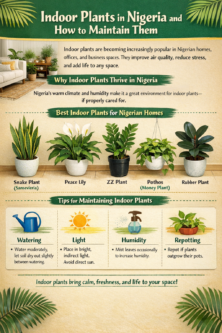
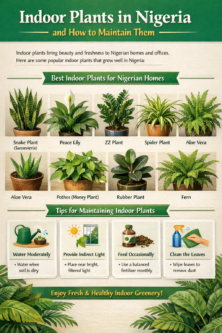
Here are some popular indoor plants that grow well in Nigeria:
1. Snake Plant (Mother-in-Law’s Tongue)
One of the best indoor plants in Nigeria. It tolerates heat, low light, and irregular watering.
Maintenance:
Water once every 1–2 weeks
Keep away from excessive moisture
Thrives in indirect sunlight
2. Money Plant (Golden Pothos)
Loved for its fast growth and air-purifying qualities.
Maintenance:
Water when the soil feels dry
Place near windows with indirect light
Trim regularly to encourage growth
3. Peace Lily
Perfect for homes and offices. Adds elegance and cleans indoor air.
Maintenance:
Water once a week
Likes indirect sunlight
Mist leaves occasionally in dry weather
4. ZZ Plant
Ideal for busy people or offices.
Maintenance:
Very little watering required
Tolerates low light
Avoid overwatering
5. Rubber Plant
Bold leaves and great décor appeal.
Maintenance:
Moderate watering
Wipe leaves to remove dust
Keep near filtered sunlight

Indoor Plant Maintenance Tips in Nigeria
To keep your indoor plants healthy year-round, follow these tips:
1. Avoid Overwatering
This is the most common mistake in Nigeria. Because of humidity, plants don’t need frequent watering. Always check the soil before watering.
2. Ensure Proper Drainage
Use pots with drainage holes to prevent root rot—especially important during the rainy season.
3. Watch Out for Heat
Keep plants away from direct sunlight and heat sources like generators, ovens, or windows with harsh afternoon sun.
4. Clean the Leaves
Dust builds up quickly indoors. Wipe leaves gently with a damp cloth to help plants breathe better.
5. Use Organic Fertilizer Occasionally
Feed plants once a month using compost or liquid fertilizer to encourage healthy growth.
Where Indoor Plants Are Best Used
Living rooms
Bedrooms
Offices and reception areas
Restaurants and cafés
Balconies and shaded verandas